Pocket Filters
Multi-pocket filters with high filtration surface and low pressure drop | Ideal for industrial and commercial HVAC systems
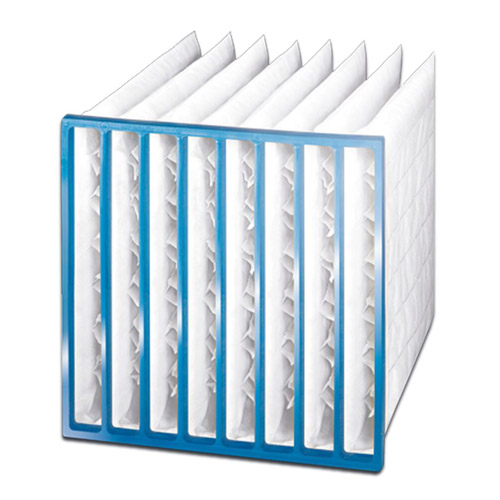

What are Pocket Filters?
Pocket filters are one of the most advanced types of air filters designed to remove suspended particles and improve indoor air quality. Due to having multiple pockets or bags, these filters offer a significantly larger filtration surface compared to panel filters and direct airflow with lower pressure drop.
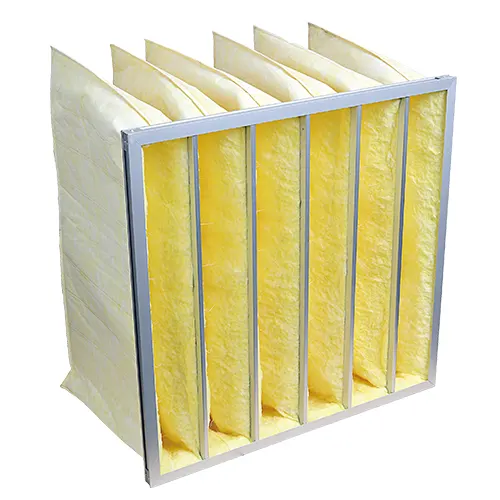
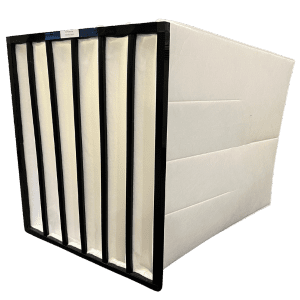
Features & Structure
Multi-Pocket Design
Multiple pockets or bags for several times larger filtration surface compared to conventional filters
High Quality Fibers
High-quality synthetic or cellulosic fibers for capturing fine and medium particles
Durable Frame
Metal or plastic durable frame with ergonomic design for easy installation in ventilation ducts
Low Pressure Drop
Aerodynamic pocket design for reduced pressure drop and increased system efficiency
Pocket Filter Classification
Pocket filters can be classified based on filtration efficiency, particle type, and standards:
1. Based on Efficiency
Coarse Filters
Removal of large and medium particles (dust and large suspended particles)
✓ Application: Pre-filters in industrial ventilation and public buildings
Fine Filters
Removal of fine and medium particles with high efficiency
✓ Application: Office buildings, hospitals, light clean rooms, and sensitive HVAC systems
High Efficiency Filters
Removal of particles ≥0.3 microns with 99.95%–99.97% efficiency
✓ Application: ISO Class 5–6 clean rooms, hospitals, and pharmaceutical industries
2. Based on Number of Pockets
| Number of Pockets | Application | Specifications |
|---|---|---|
| 4–6 Pockets | Residential and small systems | Suitable for residential units and small office spaces |
| 8–12 Pockets | Office systems and medium commercial buildings | Balance between filtration surface and space occupancy |
| 16+ Pockets | Large industrial environments, clean rooms, and hospitals | Maximum filtration surface and longest service life |
3. Based on Standards
EN 779
For advanced and intermediate filters (G and F classes)
ISO 16890
Evaluation of filtration for PM10, PM2.5, PM1 suspended particles
HEPA
Final filter with ultra-high efficiency for sensitive environments
Pocket Filter Applications
- Industrial and commercial HVAC systems
- Hospitals and healthcare facilities
- Office buildings and educational centers
- Clean rooms and pharmaceutical industries
- Final filter in high-sensitivity HVAC systems
- Electronics and microelectronics industries
Benefits of Using Pocket Filters
Extended Filter Life
High filtration surface increases filter service life and reduces maintenance costs
Reduced Energy Consumption
Lower pressure drop means lower energy consumption for fans and blowers
Higher Air Quality
Effective removal of fine and medium particles with high efficiency
Multi-Stage Protection
Can be combined with G or F class pre-filters for multi-stage protection
Filter Class Comparison Based on EN 779 Standard
| Filter Class | Average Efficiency (Am) | Main Application | Particle Type |
|---|---|---|---|
| G4 | – | Pre-filter | Coarse particles (>10 microns) |
| F5 | 40-60% | Intermediate filter | Medium and fine particles |
| F6 | 60-80% | Final filter in standard systems | Fine particles (1-10 microns) |
| F7 | 80-90% | Hospitals, laboratories | Very fine particles (0.5-1 micron) |
| F8 | 90-95% | Clean rooms, pharmaceutical industries | Sub-micron particles |
| F9 | >95% | Ultra-sensitive environments | Very fine particles (<0.5 micron) |
* EN 779 standard has been replaced by ISO 16890 since 2018
Why Sepanta Palayeh Pars?
Sepanta Palayeh Pars, utilizing the latest technical knowledge and advanced machinery, produces various types of pocket filters in different classes from G4 to F9, compliant with EN 779 and ISO 16890 standards. The pocket filters manufactured by this company, with high quality, long service life, and optimal pressure drop, are an ideal choice for industrial, commercial, and sensitive HVAC systems.
- Production in G4 to F9 and HEPA classes
- Design with various pocket counts (4 to 20 pockets)
- Use of premium quality synthetic fibers
- Step-by-step quality control and efficiency testing
- Full compliance with EN 779 and ISO 16890 standards
- Custom manufacturing capabilities based on customer requirements