Hydraulic Filters
Removal of solid contaminants, wear particles, and oil oxidation products | Extending equipment life and reducing maintenance costs
General Introduction
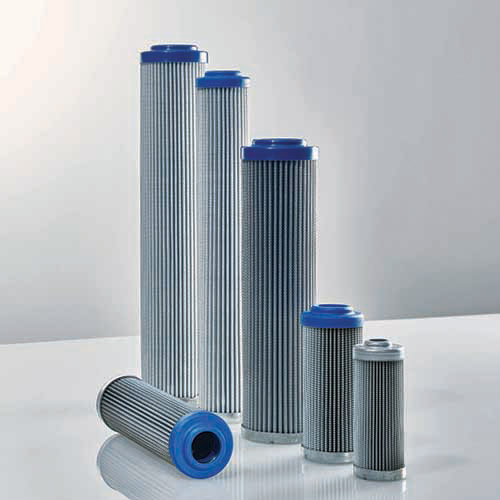
Hydraulic filters are designed to remove solid contaminants, wear particles, contaminants from component wear, environmental ingress, and oil oxidation products in hydraulic systems. Controlling the contamination level of hydraulic fluid plays a vital role in increasing equipment life, preventing sudden failures, and reducing maintenance costs.
Modern hydraulic systems operate with very precise tolerances; therefore, even very fine particles can cause severe wear, reduced efficiency, and damage to valves and pumps.
Main Filtration Objectives
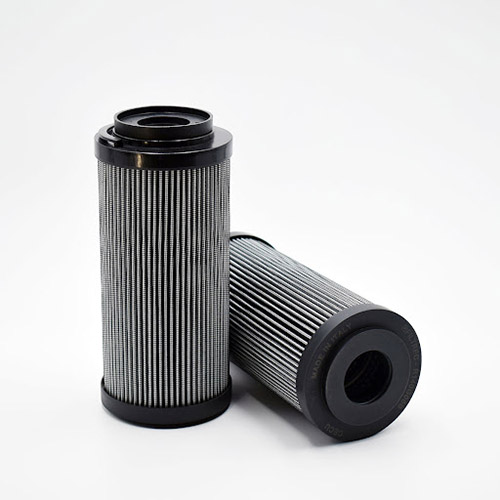
Extended Life
Pumps, valves, and actuators
Reduced Downtime
Reduce emergency system stops
Improved Stability
Enhanced performance stability and control accuracy
Cost Reduction
Reduced maintenance and repair costs
Target Cleanliness
Achieving desired cleanliness class according to ISO 4406
Classification by Installation Location
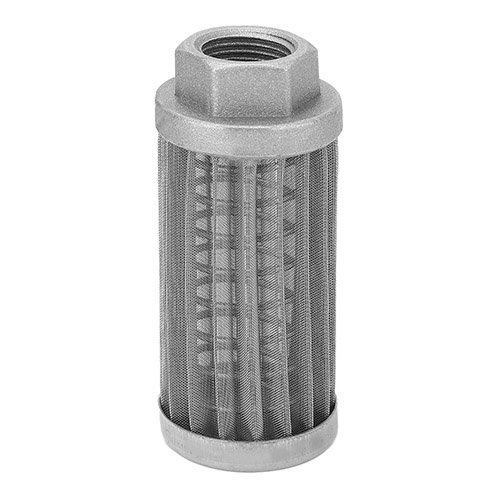
Suction Filter
Inside or on the tank, before the pump
Primary protection of pump against coarse particles
60 to 250 microns
Low pressure drop | Media includes metal mesh or wire screen | Focus on preventing cavitation | Typical use in light to medium industrial systems
Pressure Line Filter
After the pump and before the consumer
Direct protection of control valves and actuators
3 to 20 microns
Withstands high pressures (up to several hundred bar) | Media typically microglass fiber | Suitable for sensitive systems and servo valves
Return Line Filter
Return path to tank
Removing contamination before re-entering the tank
10 to 25 microns
Medium pressure resistance | Mounted on tank cover or inline | Cost-effective for most industrial systems | Most common filter type in industrial machinery
Offline / Kidney Loop Filter
Independent circuit from main system
Continuous oil cleanliness improvement
Steel industry, power plants, and heavy systems
Independent operation from main cycle | Can be combined with cooler or contamination sensor | Extends oil life
Classification by Filter Element Type
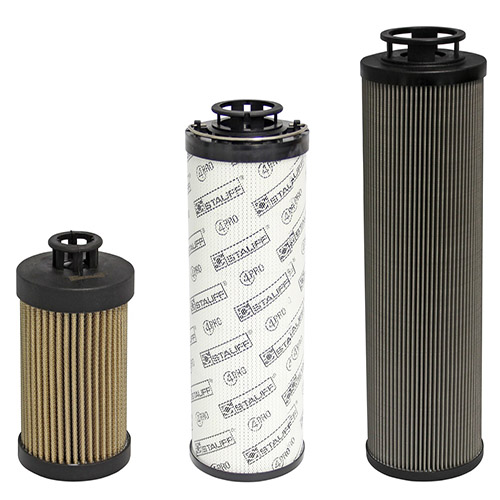
Cellulose
Cellulose
Economical, suitable for general applications
Microglass
Microglass
High efficiency, greater dirt holding capacity
Wire Mesh
Wire Mesh
Washable, suitable for suction
Synthetic
Synthetic
High resistance to pressure and temperature
Key Filter Selection Parameters
Nominal Flow Rate
Operating Pressure
µm Rating
Beta Ratio – βx ≥ 200
ISO 4406
Mineral Oil / HFC / HFD etc.
Operating Temperature
Standards and Tests
ISO 16889
Multi-pass test - International standard for evaluating hydraulic filter performance using multi-pass method
ISO 4406
Cleanliness code - Hydraulic fluid cleanliness code
ISO 3968
Pressure drop test - Filter pressure drop test
ISO 16889 - Multi-Pass Test
ISO 16889 is the international standard for evaluating hydraulic filter performance using the multi-pass method. In this test, contaminated fluid is continuously passed through the filter, and the number of particles at the inlet and outlet is measured using a particle counter. The test result is expressed as the Beta Ratio (βx), which indicates the separation efficiency at a specific particle size, for example (β10≥200). This standard also determines the Dirt Holding Capacity and the filter's pressure drop behavior up to the clogging point. ISO 16889 is the basis for technical comparison between filters and plays a key role in determining the target cleanliness class according to ISO 4406.
Difference Between Hydraulic Filters and Oil Filters
| Oil Filter | Hydraulic Filter |
|---|---|
| Focus on lubrication systems and engines | Focus on hydraulic power transmission systems |
| Usually lower operating pressure | High operating pressure (sometimes several hundred bar) |
| Dominant contamination: soot and combustion products | Dominant contamination: metal particles and component wear |
| Filtration rating typically 10–40 microns | Filtration rating can be up to 3 microns or less |
| Design suitable for engine cycle | Design suitable for precision valves and servo valves |
Why Sepanta Palayeh Pars?
Domestic Production with International Standards
Design and testing based on multi-pass test requirements according to ISO 16889
Competitive Price & Eliminated Import Intermediaries
Reduced final cost without quality compromise
Fast Delivery & Stable Inventory
Immediate supply without dependence on import time
Customization Capability
Production based on flow rate, operating pressure, and required cleanliness class
Direct Technical Support
Consultation for filter selection and equivalent replacement for foreign brands
After-Sales Service
Spare parts supply and ensuring continuous operation of hydraulic systems